Nassau Bahamas Currency and Money Tips for Cruise Passengers
One of the most common questions cruise passengers ask before visiting Nassau is about money. What currency do they use? Do I need to exchange money? Will my credit card work? The good news is that the Bahamas is one of the easiest Caribbean destinations for American and international visitors when it comes to handling money. This guide covers everything you need to know about currency, payments, tipping, and smart money strategies for your Nassau port day.
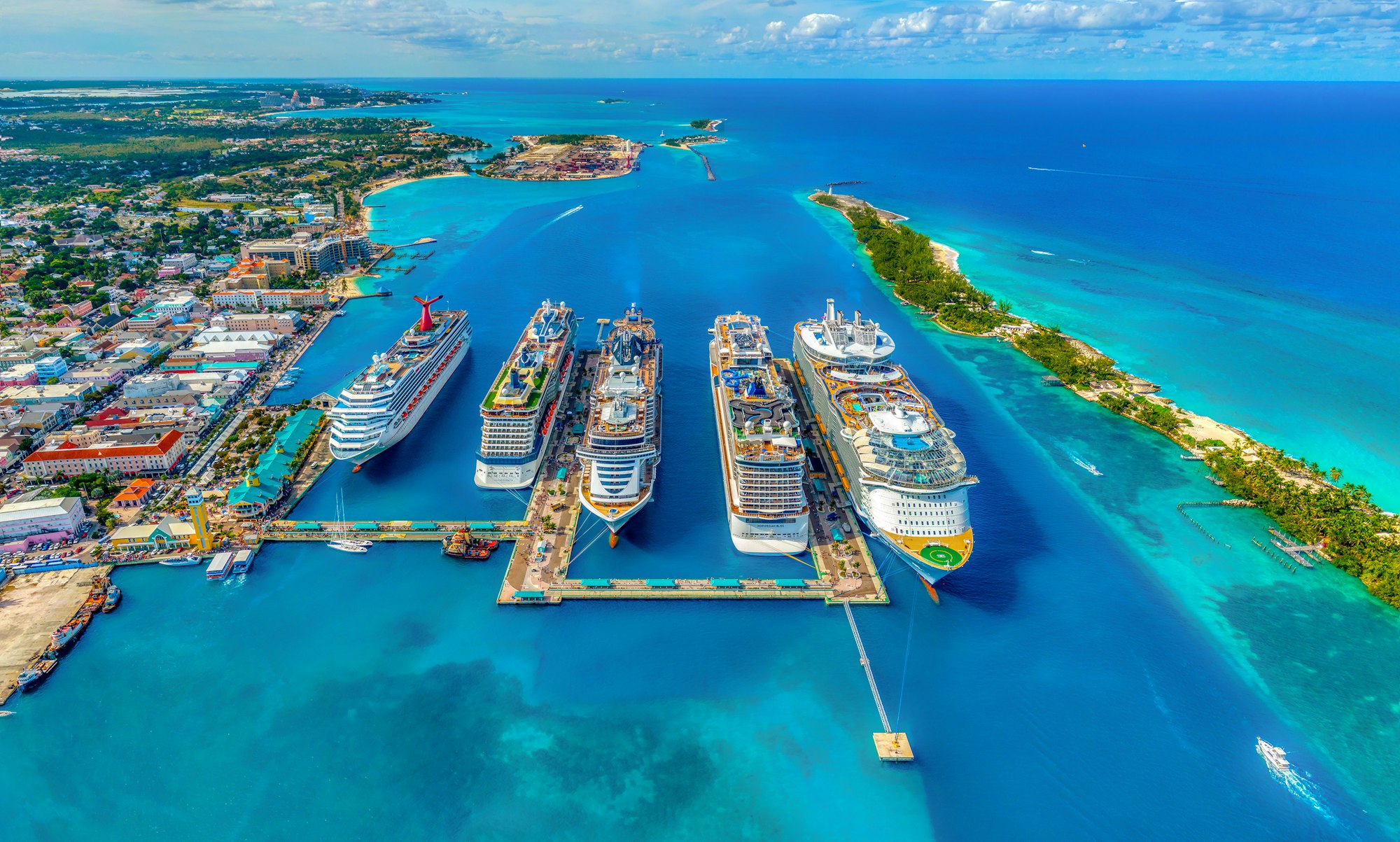
Before diving into the details, check out our Nassau cruise port guide for terminal logistics and orientation once you arrive.
The Bahamian Dollar: Pegged 1:1 to the US Dollar
The official currency of the Bahamas is the Bahamian dollar, abbreviated as BSD or B$. The most important thing to know is that the Bahamian dollar is pegged at a fixed 1:1 exchange rate with the US dollar. One Bahamian dollar always equals one US dollar. This is not a fluctuating rate; it is a fixed peg maintained by the Central Bank of the Bahamas.
What this means in practice:
- US dollars are accepted everywhere in Nassau. Every shop, restaurant, taxi, and market stall in Nassau accepts US dollars at face value. You do not need to exchange your money before arriving.
- You will receive change in a mix of currencies. When you pay with US dollars, you may receive Bahamian dollars, US dollars, or a mix of both in your change. This is completely normal.
- Bahamian dollars are not easily exchangeable outside the Bahamas. If you receive Bahamian coins or bills in change, try to spend them before returning to your ship. Most US banks will not exchange Bahamian currency, and exchange kiosks at airports typically offer poor rates.
Bahamian Coin Differences
Bahamian coins look quite different from US coins, which can cause confusion. The Bahamian 15-cent piece is particularly unusual, as no US equivalent exists. Bahamian quarters, dimes, and nickels are also shaped differently. Keep your Bahamian coins separate from your US change to avoid mixing them up when you return home, as US vending machines and parking meters will reject them.
The Bahamian bills feature colorful designs with images of local wildlife, historical figures, and landmarks. They come in denominations of $1, $5, $10, $20, $50, and $100, similar to US bills but with distinct Bahamian artwork.
Cash vs Cards in Nassau
Where to Use Credit and Debit Cards
Credit and debit cards are widely accepted at:
- Bay Street shops and duty-free stores - All major retailers accept Visa, Mastercard, and American Express.
- Restaurants in tourist areas - Most sit-down restaurants in downtown Nassau, Cable Beach, and Paradise Island accept cards.
- Atlantis Resort and Casino - All venues within Atlantis accept cards, and ATMs are available throughout the property.
- Organized excursion operators - Most established tour companies accept card payments for bookings.
- Hotels and resorts - If you visit any resort property for a day pass or dining, cards are standard.
Where You Need Cash
Cash remains essential in several situations:
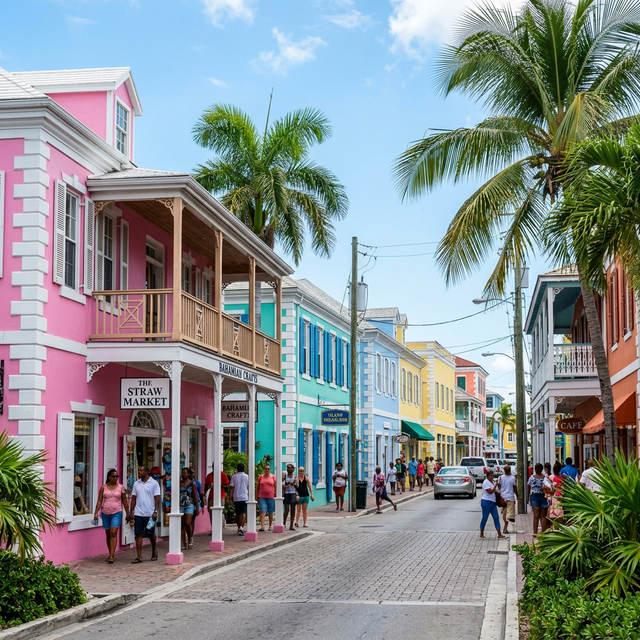
- Straw Market - Most vendors at the Nassau Straw Market operate on a cash-only basis. This is also where bargaining is expected.
- Arawak Cay (Fish Fry) - Many of the small restaurants and food stalls at this popular dining spot prefer or require cash.
- Taxis - While some cabs are beginning to accept cards, the majority of Nassau taxi drivers prefer cash. Always carry enough for your rides.
- Street vendors and small shops - Conch salad stands, fruit sellers, and small souvenir shops typically accept cash only.
- Jitney buses - The local public buses cost $1.25 per ride and require exact change in cash.
- Beach chair and umbrella rentals - At beaches like Junkanoo Beach and Cable Beach, rental operators usually accept cash only.
- Tips - Always carry small bills for tipping. More on this below.
Our recommendation: Bring $100 to $200 in cash (small bills, including plenty of $1 and $5 notes) per person for a standard port day. Carry a credit card as backup for larger purchases or emergencies.
ATM Locations in Nassau
If you need additional cash during your port day, several ATMs are conveniently located near the cruise port:
- Festival Place (cruise terminal) - There is an ATM inside the terminal building. Be aware that it can have long lines when multiple ships are in port and may charge higher fees.
- Bay Street - Multiple bank ATMs are located along Bay Street within a five-minute walk from the port. Look for Royal Bank of Canada (RBC), FirstCaribbean International Bank, and Bank of the Bahamas branches.
- Paradise Island - Atlantis Resort has ATMs on the casino floor and near the main lobby.
- Cable Beach - ATMs are available at major hotels along the Cable Beach strip.
ATM Tips
- Withdrawal fees - Expect to pay a foreign transaction fee from your home bank (typically $3 to $5) plus a local ATM surcharge. Check with your bank before traveling.
- Dispensed currency - Most ATMs in Nassau dispense US dollars, though some may offer Bahamian dollars. Both are equally useful on the island.
- Daily limits - Some ATMs enforce a withdrawal limit of $300 to $500 per transaction. Plan accordingly if you need larger amounts.
- Card networks - Visa, Mastercard, Plus, and Cirrus networks are all supported at major bank ATMs. Discover and American Express may have limited ATM availability.
- Security - Use ATMs inside bank branches or well-lit hotel lobbies. Avoid standalone ATMs in isolated locations.
Tipping Customs in Nassau
Tipping is an important part of Bahamian culture and is expected in most service situations. Here is a breakdown of standard tipping practices:
Restaurants
- Sit-down restaurants - Tip 15 to 18 percent of the pre-tax bill. Some restaurants add an automatic gratuity of 15 percent, especially for larger parties. Check your bill before adding an additional tip.
- Casual dining and food stalls - A tip of $1 to $3 per person is appropriate at casual spots like Fish Fry.
- Bars - Tip $1 to $2 per drink or 15 percent of your tab.
Transportation
- Taxis - Tip 10 to 15 percent of the fare. For a $25 ride to Cable Beach, a $3 to $4 tip is standard.
- Tour guides - Tip $5 to $10 per person for a half-day tour, or $10 to $20 per person for a full-day excursion. Higher tips are appropriate for exceptional guides.
- Water taxi and ferry operators - A $2 to $5 tip per person is appreciated.
Other Services
- Hotel staff - If you visit a resort, tip bellmen $1 to $2 per bag and housekeeping $2 to $5 per day.
- Beach attendants - Tip $2 to $5 for umbrella and chair setup at the beach.
- Hairstylists and spa services - Tip 15 to 20 percent of the service cost.
Important note: Always tip in cash, even if you pay the main bill with a credit card. This ensures the server or driver receives the tip directly and immediately.
Digital Payments and Modern Options
The Bahamas has been at the forefront of digital currency adoption in the Caribbean. The Sand Dollar, introduced by the Central Bank of the Bahamas, is a digital version of the Bahamian dollar. However, for cruise passengers spending a single day in port, the Sand Dollar is unlikely to be relevant. It is primarily used by residents through Bahamian banking apps.
Mobile Payment Apps
- Apple Pay and Google Pay - Accepted at some larger retailers and chain restaurants in Nassau, but not widely adopted at smaller businesses.
- PayPal and Venmo - Not commonly accepted at Nassau businesses. Do not rely on these for in-person purchases.
- Contactless cards - Tap-to-pay functionality works at many card terminals in tourist areas, though some older terminals still require chip insertion or swiping.
Smart Money Strategies for Your Port Day
Before You Leave the Ship
- Check your bank’s foreign transaction fees. Many travel credit cards waive these fees entirely. Cards from Chase Sapphire, Capital One Venture, and similar programs are good options.
- Notify your bank. While not always necessary for the Bahamas, letting your bank know you are traveling can prevent your card from being flagged and declined.
- Get small bills. If you brought large denominations, break them at the ship’s guest services desk before going ashore. Small vendors may not have change for a $50 or $100 bill.
At the Straw Market
Bargaining is expected and part of the experience at the Nassau Straw Market. Here are some money-smart tips:
- Start at 40 to 50 percent of the asking price and negotiate from there.
- Bundle purchases - Buying multiple items from the same vendor gives you stronger bargaining leverage.
- Walk away if the price is not right. Vendors will often call you back with a better offer.
- Pay in cash - Cash transactions are preferred and may get you a slightly better price than card payments.
- Compare prices among stalls before committing to a purchase. Similar items are sold by multiple vendors.
Taxi Fare Tips
Taxi fares in Nassau are set by the government and are based on zones, not meters. Standard rates from the cruise port include:
- Downtown Nassau - Walking distance, no taxi needed
- Junkanoo Beach - $5 to $8 per person or walk for free in 15 minutes
- Cable Beach - $20 to $25 for two passengers
- Paradise Island (Atlantis) - $15 to $20 per person in a shared van, or $30 to $40 for a private taxi
- Adelaide Beach - $35 to $40 for two passengers
Always confirm the fare with the driver before getting in. Ask whether the quoted price is per person or for the entire vehicle. If you plan multiple stops, negotiate a round-trip or half-day rate. For groups of four or more, a van taxi or private tour may be more economical.
Duty-Free Shopping and Tax
The Bahamas does not charge a sales tax (VAT) on most goods, which makes shopping particularly attractive. Bay Street and the shops at Festival Place offer duty-free prices on jewelry, watches, perfumes, leather goods, and liquor. However, keep in mind:
- US customs allowances - US residents can bring back up to $800 in goods duty-free from the Bahamas. One liter of alcohol is included in this exemption.
- Compare prices - “Duty-free” does not always mean cheapest. Research prices for high-value items like electronics or designer goods before purchasing.
- Keep your receipts - You may need them for customs declaration when returning to the US.
For more ideas on how to spend your time and money in Nassau, explore our complete things to do guide. And if your itinerary includes a stop in Grand Bahama, check out our Freeport Bahamas port guide for money tips specific to that island.
Final Advice
The best financial strategy for a day in Nassau is simple: bring a moderate amount of US cash in small bills, carry a no-foreign-transaction-fee credit card, and keep your Bahamian change separate so you can spend it before reboarding. Nassau is a straightforward port for managing money, and a little preparation ensures you spend your time enjoying the island rather than worrying about payments.